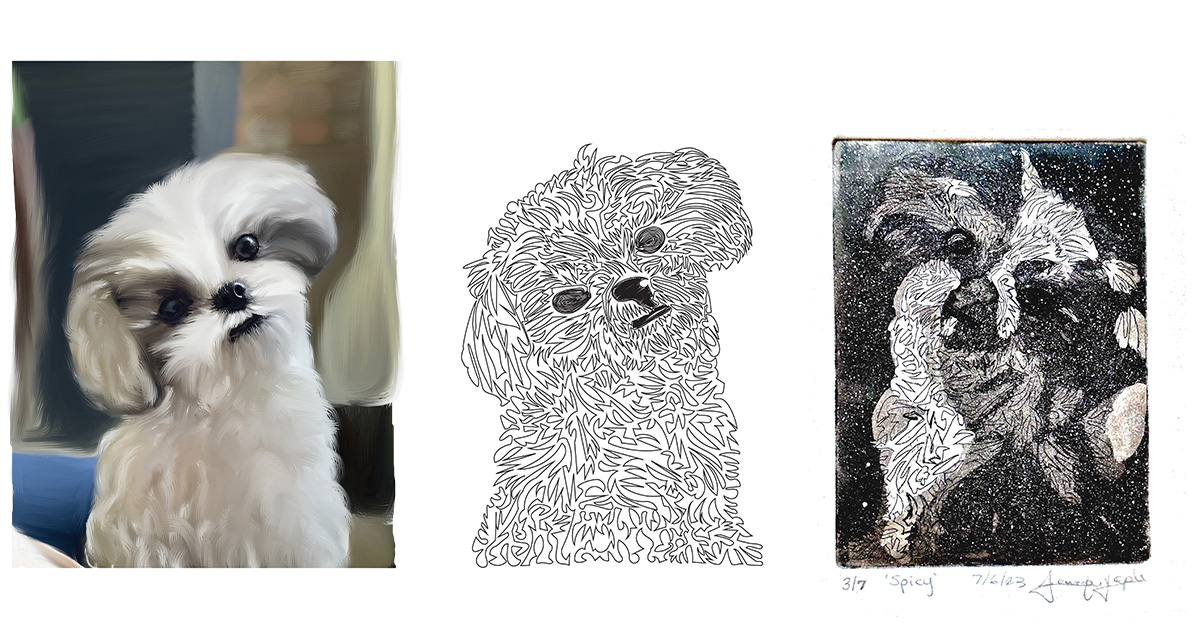
One photograph kept becoming something else
Spicy started as a convenient subject and became a recurring study in translation.
Spicy is my son and daughter-in-law’s dog. She's small, expressive, and entirely unbothered. When I needed a subject for a digital painting assignment, I found a photograph of her on Facebook, one of those images where everything about the subject is right.
What I didn't know then was that the same image would follow me through several more assignments, across different classes, tools, and printmaking processes.
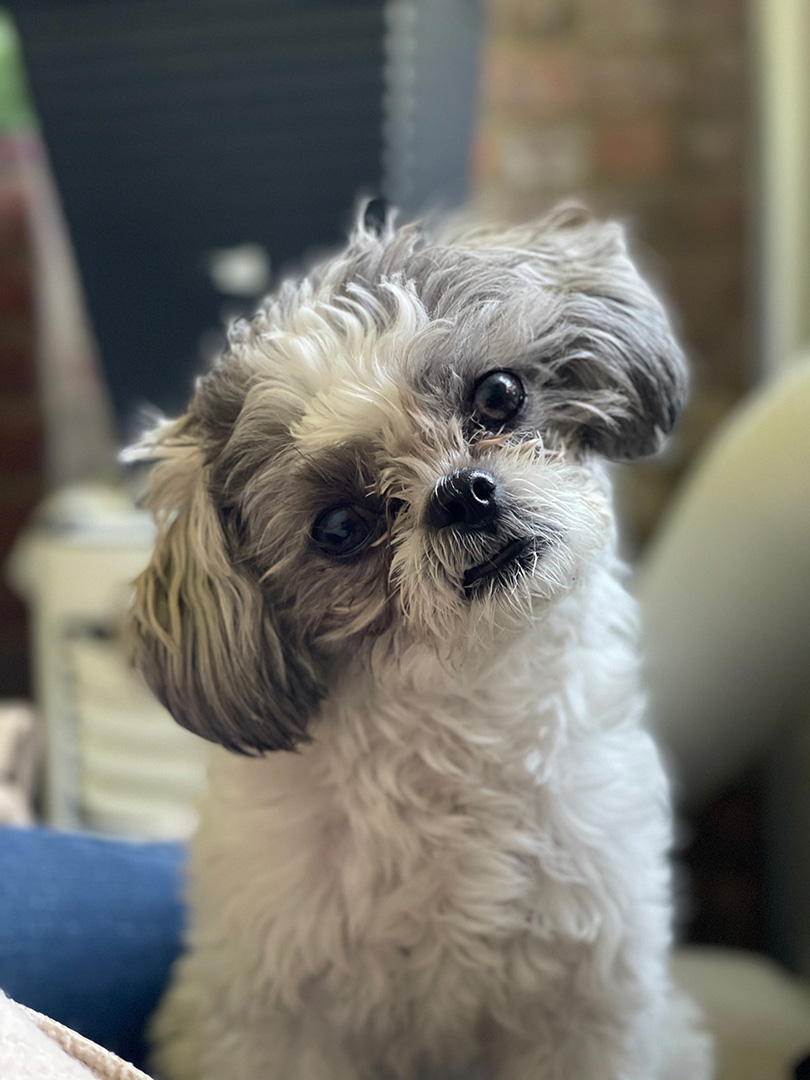
Digital painting
The first assignment was to recreate a photograph as a digital painting in Photoshop. Not by filtering it or applying effects, but by rebuilding the image through brushes, layers, and repeated looking.
Rebuilding the photo as a digital painting forced me to slow down and look closely at what gave the original photograph its personality. It made me notice the small details, such as her posture, the softness of her fur, the shape of her eyes, and the strange seriousness small dogs can have without trying.
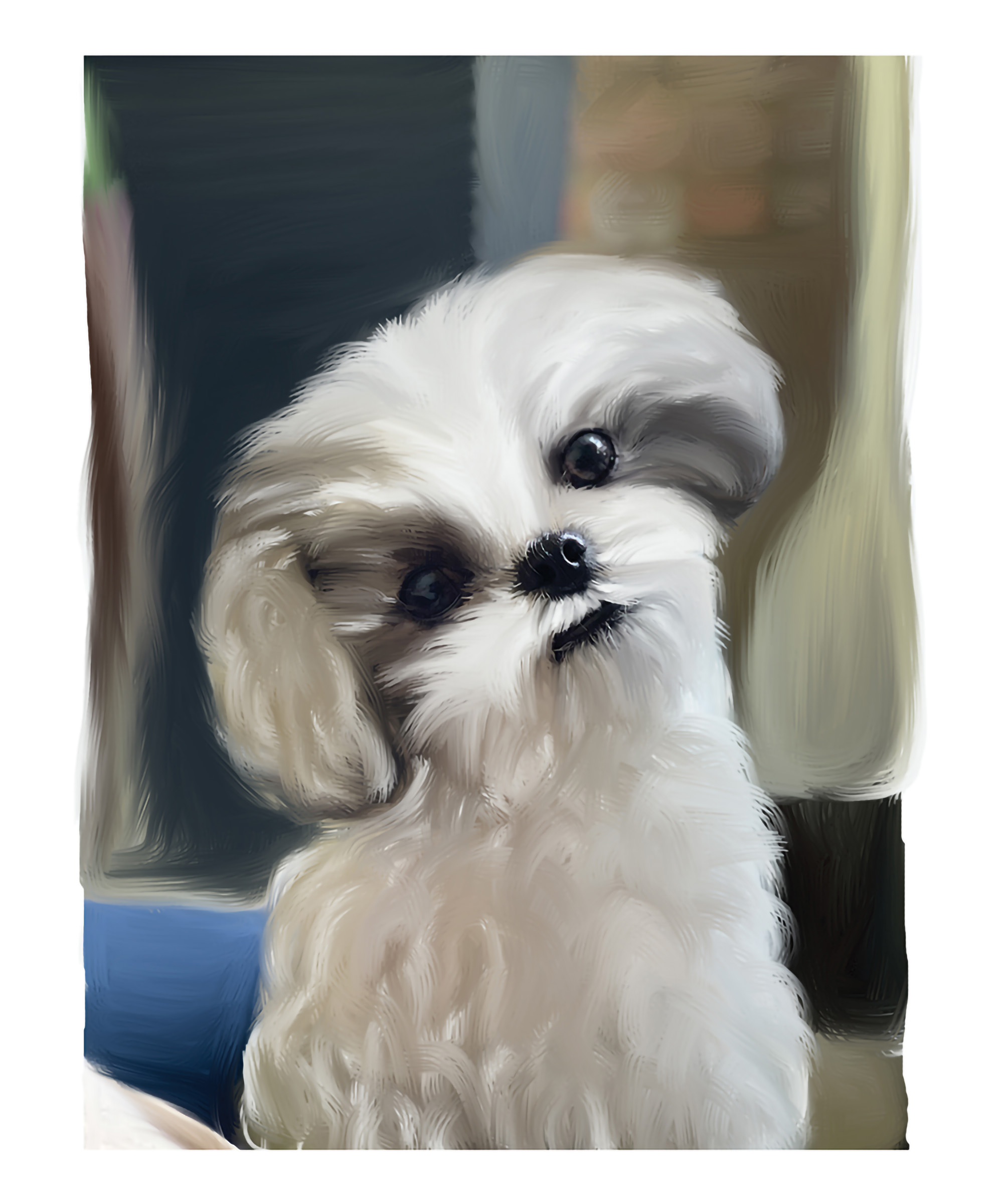
Digital painting, version 1 · Photoshop
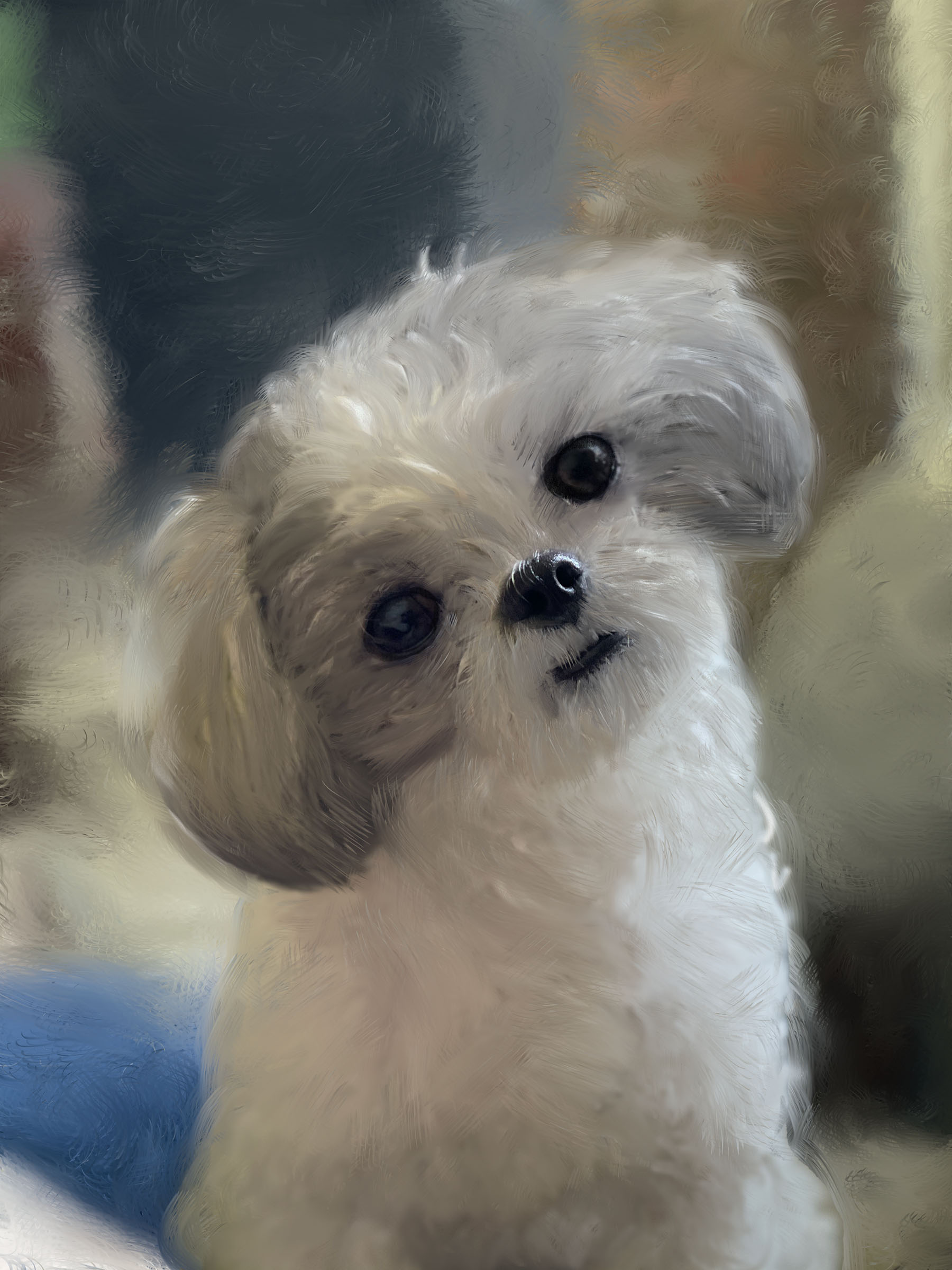
Digital painting, version 2 · Photoshop
The one-line illustration
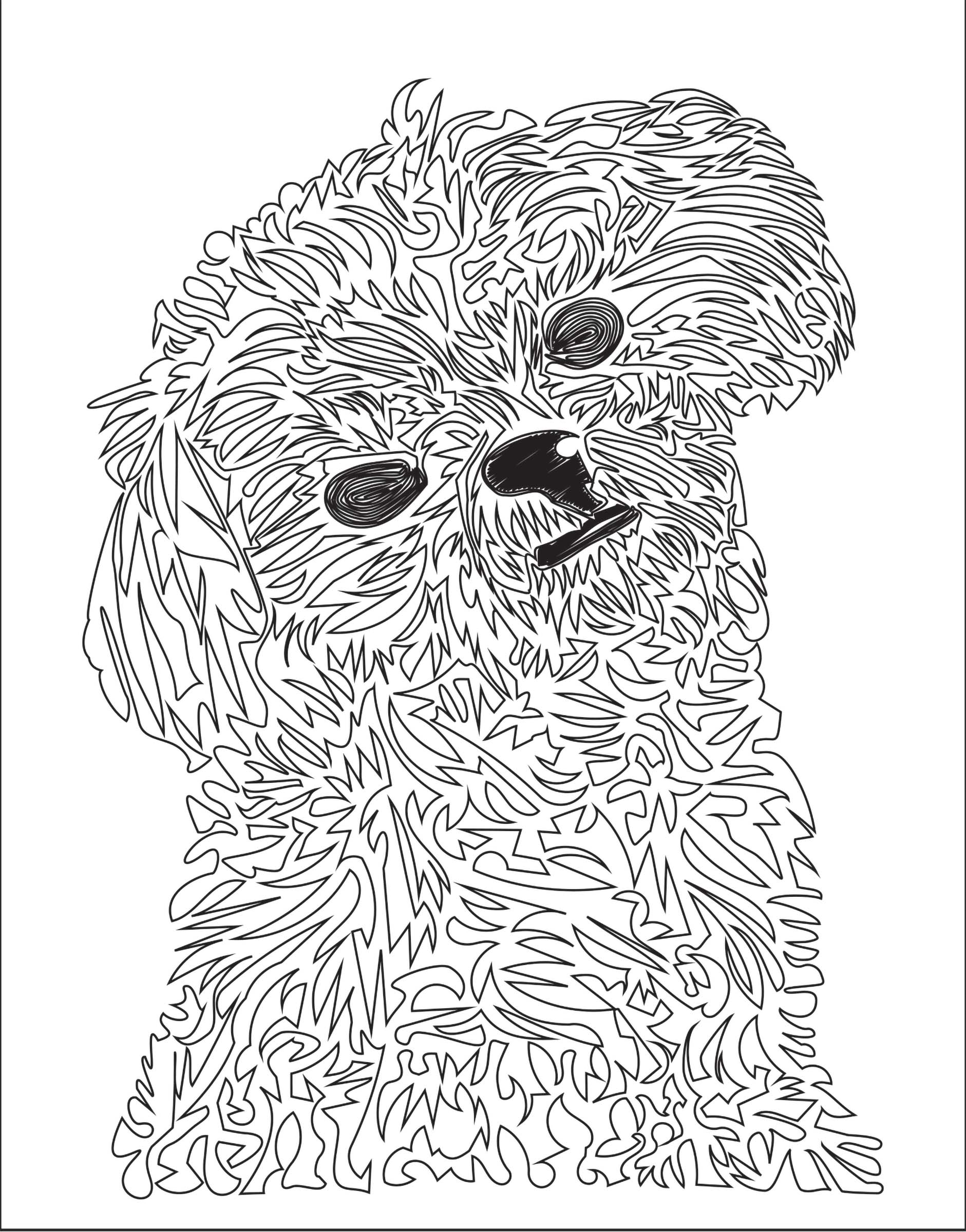
The next version came from an Illustrator assignment with a strict constraint: one continuous line, with a beginning and an end. The line could not cross itself. It could not close into a loop.
That rule changed how I had to see the image. Tone, texture, and depth disappeared, leaving only pure structure. To imply light and shadow without traditional shading, I had to vary the density of the path, bringing the line tightly against itself to create darker values, and letting it breathe and spread out for the lighter areas. It forced me to rely entirely on the spacing of a single path to communicate the whole form.
Etching and aquatint
The one-line illustration became the source for two printmaking assignments. In etching, the digital line gained pressure, texture, and the irregularity of ink on paper.
Aquatint introduced tone back into the image. After reducing Spicy to a single line, the printmaking process slowly brought weight and atmosphere back in.
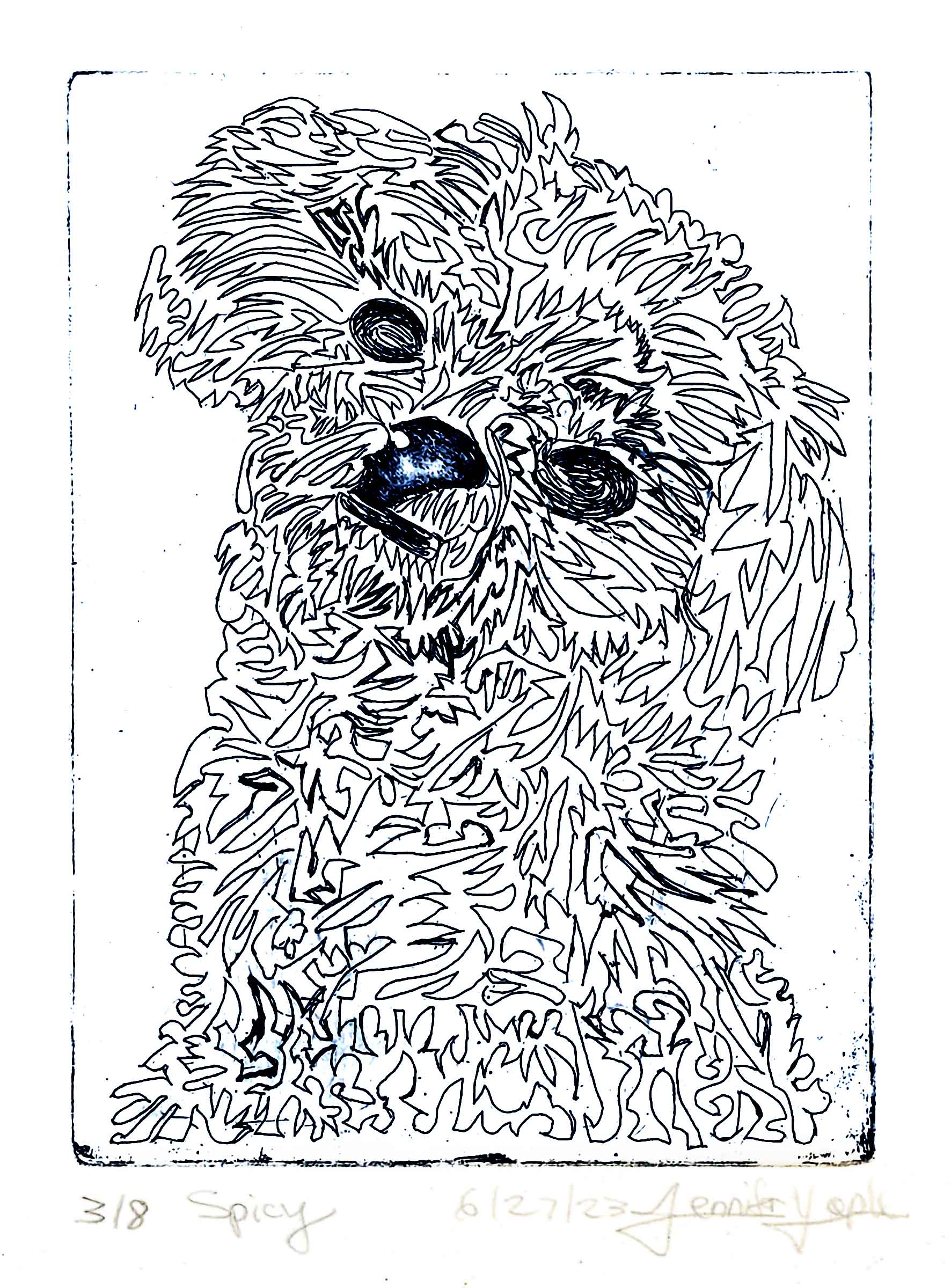
Etching · metal plate and ink
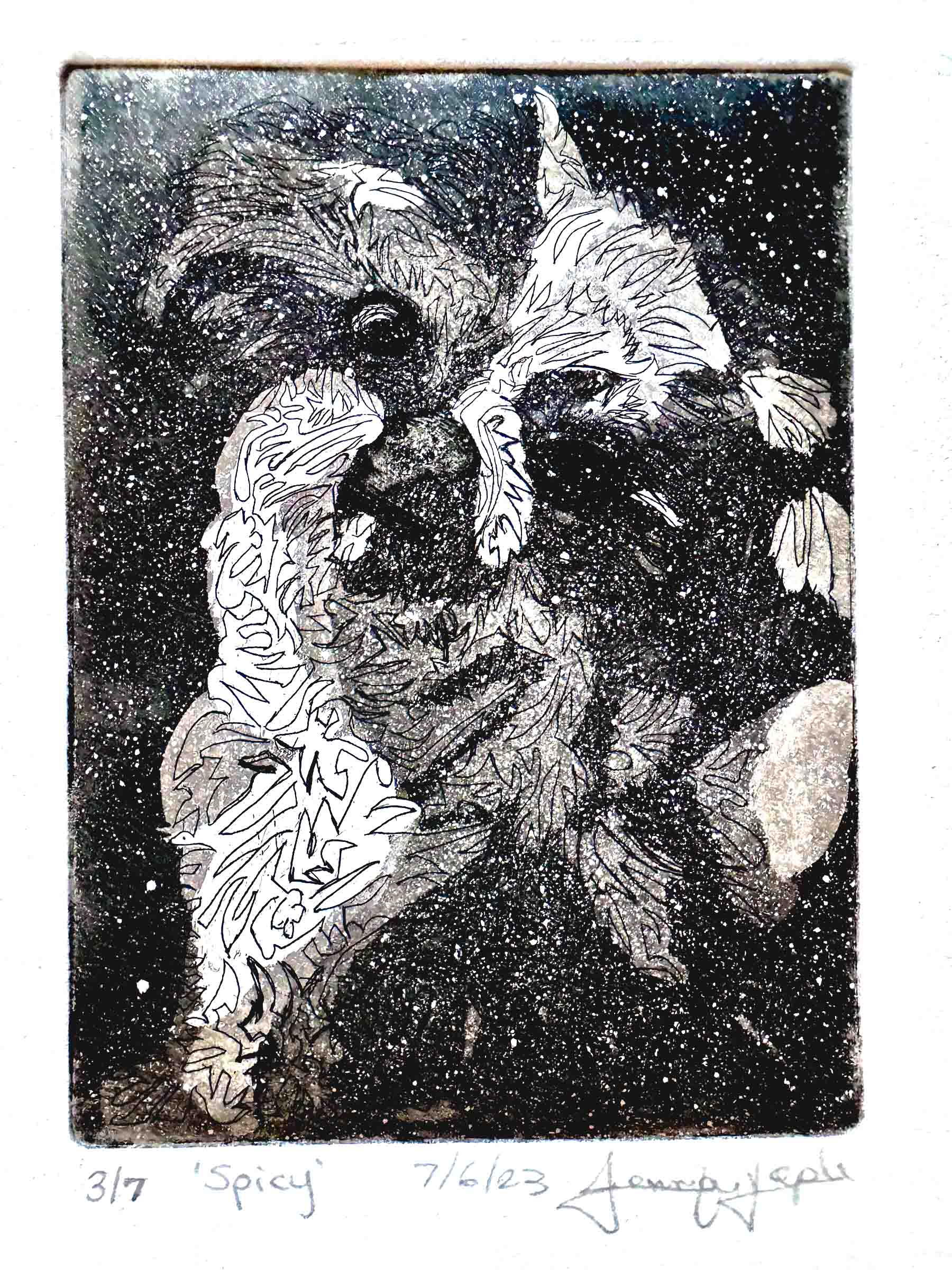
Aquatint · acid-bitten tonal variation